

Choosing the Right Outdoor Location for Your Dog in Northern Utah
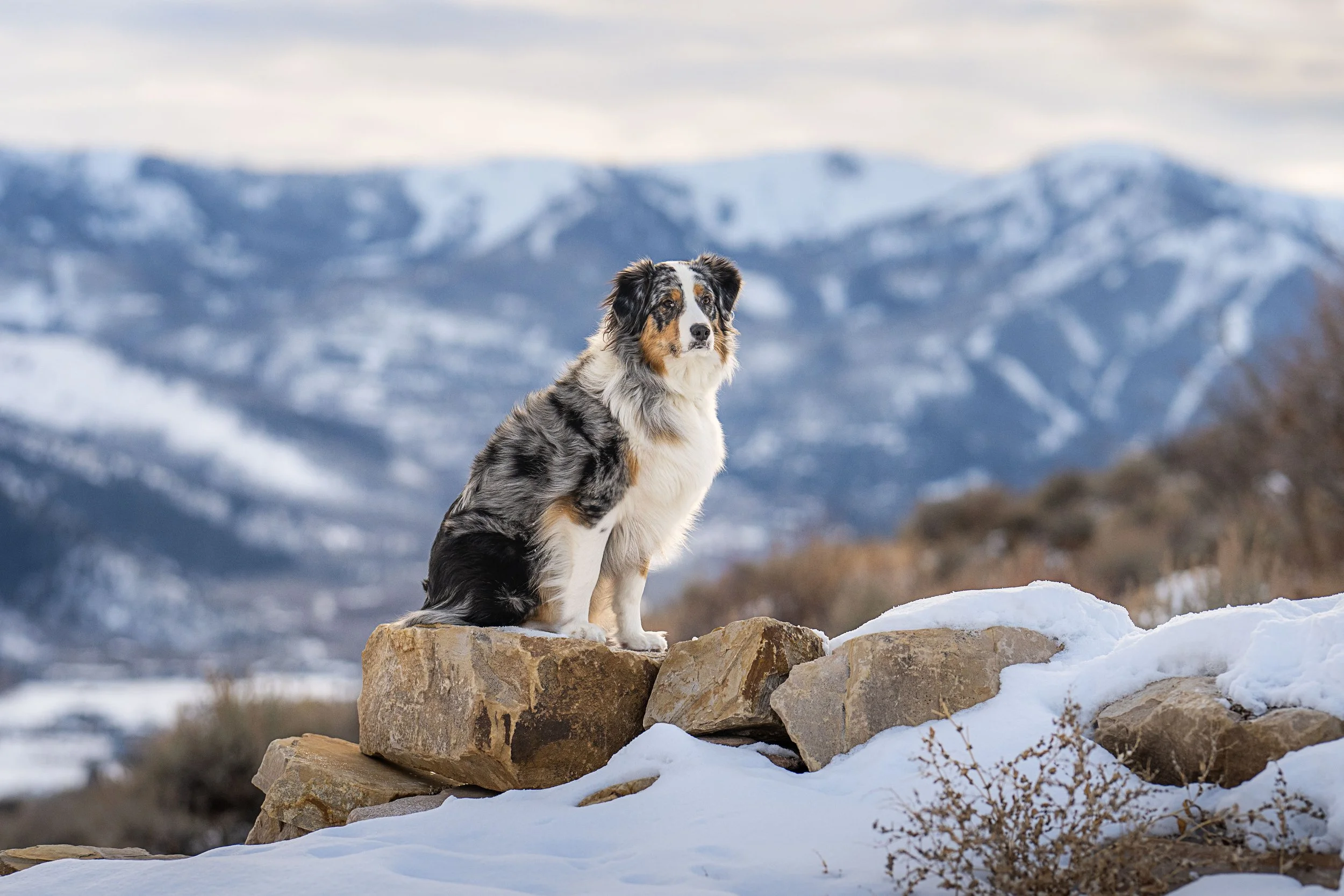
When people imagine an outdoor pet photography experience, they often start with scenery. Mountains, meadows, wide-open space.
Scenery matters, but it’s not where I start.
The right location for a wilderness adventure pet photography experience isn’t just beautiful. It supports the experience you want to have with your dog, given the season, the conditions, and who your dog actually is.
That distinction is where most outdoor sessions succeed or fall apart.
Not Every Beautiful Place Is the Right Fit
Northern Utah offers remarkable variety in a relatively small area. Alpine forests, open ridgelines, quiet canyons, desert edges, and high meadows all exist within reach.
But many visually striking places come with tradeoffs:
Heavy foot traffic
Unpredictable wildlife
Exposed terrain
Narrow trails or limited space to pause
Seasonal access issues
A location that looks perfect in a photograph may create constant management in real life. When the environment asks too much of a dog, the experience becomes about control rather than exploration.
That’s not the goal here.
Choosing the Right Location for You and Your Dog
Every experience is designed around you and your dog. Location isn’t selected in isolation — it’s shaped through conversation, your preferences, and what will create the strongest experience on that particular day.
We talk through things like:
How comfortable your dog is in new environments
How they tend to move and respond when they’re relaxed
The distance and elevation that feel appropriate given the conditions
Terrain underfoot, not just what looks dramatic in the distance
Seasonal factors like heat, snowpack, mud, or wind
The overall flow of a place, including where we can pause without pressure
You might come in with a type of landscape in mind, whether it is alpine, desert, forest, snow, or something completely different. From there, I help narrow the options so the setting supports both your goals and your dog’s comfort.
The aim isn’t simply to choose the most impressive backdrop. It’s to select a location where your dog can settle into the environment and where the experience feels natural, not managed.
Why Local Knowledge Changes the Experience
Many visitors to Utah gravitate toward iconic locations such as the Great Salt Lake, the Uintas, and well-known overlooks or trailheads. They are popular for a reason. They offer landscapes that feel distinctly and unmistakably Utah.
Visiting those places is absolutely possible.
The difference is how and when.
Local knowledge changes the experience through decisions like:
Which access points offer space rather than congestion
When foot traffic typically peaks
How light moves across the landscape at different times of day
Which nearby alternatives preserve the same character if conditions shift
If a place feels busy or constrained, we adjust without losing the essence of the landscape you had in mind.
This is not about secret locations or avoiding the places that make Utah unique. It is about understanding how specific areas behave across seasons, weather patterns, and times of day.
That preparation allows the focus to stay on the experience itself.
How Location Shapes the Experience and the Photographs
When a place feels right for your dog, you can usually tell.
Movement becomes easier. Pauses happen naturally. Attention shifts outward instead of back toward you for direction.
The experience starts to feel less like managing behavior and more like sharing space.
That shift changes the photographs, too. Instead of capturing how well your dog performed, the images reflect how they moved through the landscape that day.
Later, when you return to the photographs, what stands out is not just the scenery. It’s the sense of being there together.
Designing an Experience, Not Picking a Spot
Location choice is not a separate step from the experience. It’s part of the design.
Every wilderness adventure pet photography experience is shaped by place, season, conditions, and what you want to explore with your dog. No two experiences look the same, because they aren’t meant to.
If you’re curious about how these experiences are planned and what that process looks like in practice, you can read more here: